Series Resources
sermon-based study guide
2026-01-04 | Sermon Study Guide | PERFCT | Perfect Family

Sermon Study Guide | Series: PERFCT | Sermon: Perfect Family | Scripture: 2 Samuel 13:1–20; Psalm 51 | Date: January 4, 2026
If you’d like to dig deeper into the story of David, Family Systems Theory, or the work of breaking Generational Cycles take a look at our Series Resource Guide: 📘 PERFCT— Resource Guide
If the topics of abuse or assault raised in this sermon have surfaced painful parts of your own story, please do not walk through it alone. Our Care Team (care@menlo.church) is available to listen and provide referrals to trusted Christian counselors.
CONNECT - “A Personal Reflection”
This section is designed to help you relate personally to the theme of the sermon. It encourages you to reflect on your own life experiences and how they connect to the message.
Most of us didn’t walk into our families or relationships with a roadmap for how to deal with the pain, dysfunction, or disappointment that might show up. But we did inherit patterns—spoken or unspoken—that shape how we respond.
As you think about your family of origin or your current situation, what are some of the “unwritten rules” that shaped your home? Were you allowed to be honest? Was love conditional? What did you learn to hide or manage instead of heal? Be honest and share with your group.
ENGAGE - “Exploring the Scripture”
This section invites you to dive into the biblical passage, discuss its meaning, and apply it to your life through thoughtful questions.
Read 2 Samuel 13:1–20 together
- What are some patterns of dysfunction you notice in David’s family? What feelings does this story stir up for you?
- In what ways does David’s failure as a father echo his earlier moral failure as a king (2 Samuel 11)? How do you see pain and silence being passed down generationally?
- The Sermon discussed “The Mobile Effect.” What’s a way your family system (past or present) shifted when one part was pulled or stressed? Can you identify your role in that mobile?
- Think about the phrase, “What God doesn’t transform, we will transmit.” Are there any generational echoes—patterns or wounds—you recognize in yourself? Where did that start, and where might God want it to stop?
- In Psalm 51, David doesn’t pray for his family to change, he asks God to change him. Why is this step so often skipped? What keeps you from starting there?
- What kind of voices do you have in your circle? Do you have a “Nathan” who loves you enough to tell the truth, or are you surrounded by “Jonadabs” who only tell you what you want to hear?
APPLY - “Putting the Scriptures into Action”
This section challenges us to take what we’ve learned and implement it in practical ways in our daily lives.
- This week, try this: name the echo. Ask God to reveal one dysfunctional pattern that needs to be acknowledged, not managed, not justified, just named. Even naming it to God or journaling it can be a breakthrough step.
- Audit your circle. Who are the people influencing your decisions, especially in moments of stress, conflict, or pain? Are they helping you grow or keeping you stuck?
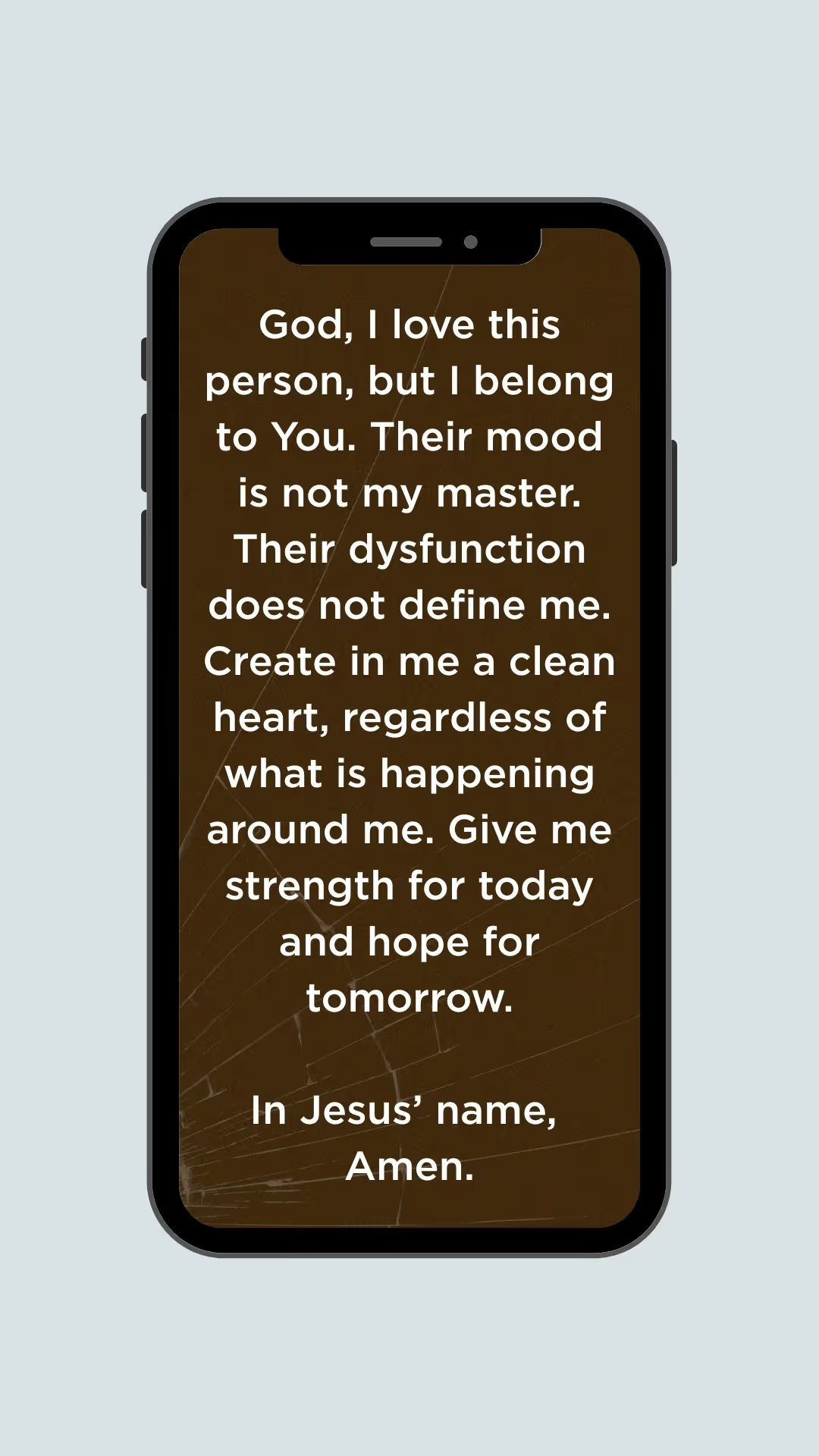
- Practice Gospel Differentiation: the ability to stay connected without being controlled. When you feel the emotional tug of your family system or circle, try using the anchor prayer below. Don’t retreat or explode, respond with grace.
- Commit to one relational boundary or spiritual habit that can begin to rewrite your family’s echo. Maybe it’s therapy, or inviting someone to speak into your life, or simply replacing silence with prayer.
- Make a commitment to walk alongside someone and revisit the foundation of faith with a friend or family member at Alpha starting this month.
PRAY - “Seeking God’s Guidance”
This section offers a short prayer to help us center our hearts and invite God to work in our lives through his scripture.
Jesus, you know the weight we carry from our families, our pasts, and our patterns.
Thank you for being a Savior who steps into our mess, not just when we’re cleaned up, but when we’re hurting and confused.
Thank you that we don’t have to fake it to find healing. We confess we’ve often tried to manage or minimize pain rather than bring it to you.
Create in us clean hearts. Renew our spirits. Heal what we’ve inherited. Change what we’re tempted to transmit. Give us the courage to be honest and the grace to begin again—with you at the center. Amen.