
Series Resources
sermon-based study guide
2026-11-15 | Sermon Study Guide | Becoming in the Age of Algorithms | Week 1 - Unfollow
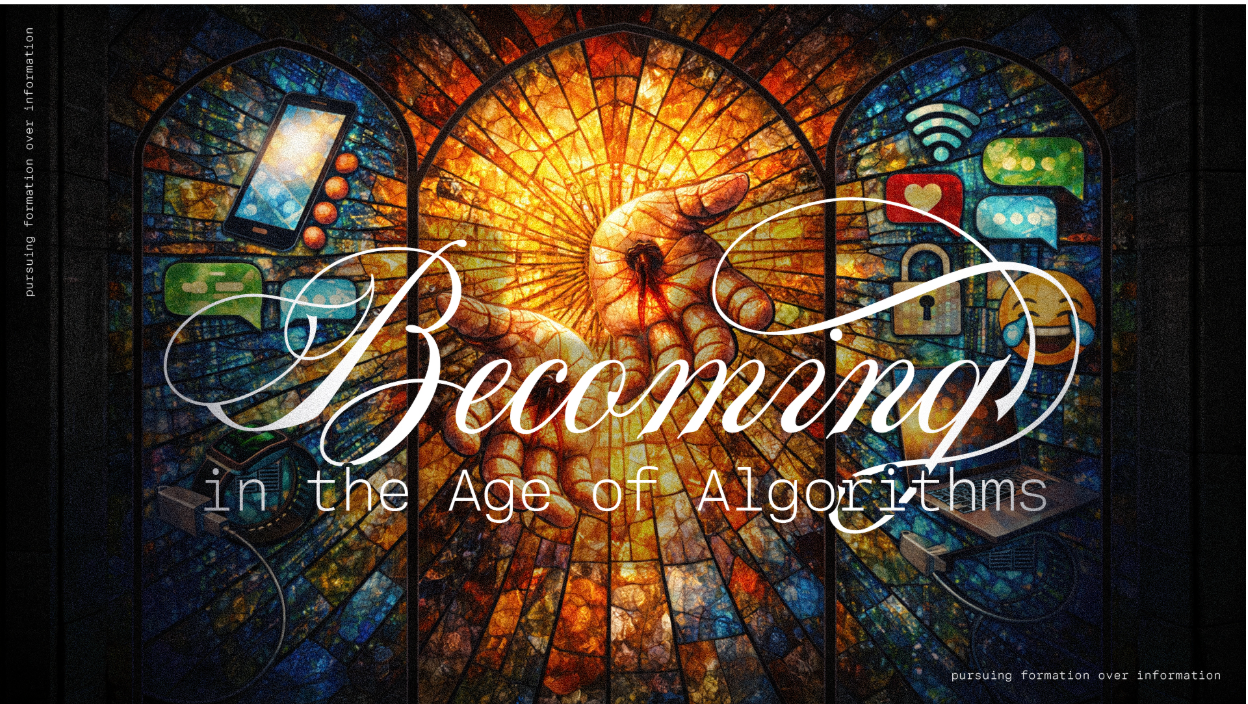
Sermon Study Guide | Series: Becoming in the Age of Algorithims | Sermon: Unfollow | Scripture: Deut. 6:4-9; 1 Cor. 6:12; John 10:10, 8:32 | Date: November 15, 2026
CONNECT - “A Personal Reflection”
This section is designed to help you relate personally to the theme of the sermon. It encourages you to reflect on your own life experiences and how they connect to the message.
The message asks us to imagine a smartphone behind glass in a museum. What would someone looking at it a hundred years from now want to know about us? They might ask what it made easier: finding our way, staying in touch, getting help. They might also ask what it made harder: waiting without distraction, giving someone our full attention, or noticing what we feel before reaching for something to take our minds off it.
Think about an ordinary moment when you reach for your phone without deciding to: waking up, waiting in line, or sitting down after a long day. What are you usually looking for in that moment? How do you tend to feel when you put it down? Share with your group.
ENGAGE - “Exploring the Scripture”
This section invites you to dive into the biblical passage, discuss its meaning, and apply it to your life through thoughtful questions.
- Read Deuteronomy 6:4–9. God tells Israel to talk about his words at home and along the road, when they lie down and when they rise. What do you notice about where and when this happens? How might hearing the same words in ordinary moments shape what people love over time?
- What currently gets the first and last word in your day? How does what you take in first thing in the morning affect what you carry into the rest of it?
- The series uses the word dysinformation to describe how the way we receive information can shape us poorly, even when the information itself is true. Can you think of a time when everything you read may have been accurate, but the steady stream left you more anxious, suspicious, or impatient? What did you carry from it into the next conversation?
- Read 1 Corinthians 6:12. Paul puts two questions alongside what is permitted: Is it helpful? Does it have a hold on me? Apply both questions to one tool you use every day. Where does it serve you well? When is it hardest to decide you’ve had enough?
- Think about a recent time you couldn’t check something you normally check. What did you notice in yourself? Was there a real need you couldn’t meet, or a feeling you had to sit with longer than usual?
- The message says that what we follow takes us somewhere. Think about one person, account, or source you return to often. What do you find yourself paying more attention to because of it? What are you learning to want?
- Read John 8:31–33. Jesus connects freedom with abiding, or staying, in his word. The people listening are sure they are already free. Where do you recognize that confidence in yourself? What might help you tell the difference between “I could stop” and actually being free to stop?
- Read John 8:34–36. Jesus is talking about a deeper bondage than a habit we wish we could break. He names sin and says the Son sets people free. How does that change the way you think about a boundary? What would it look like to practice a boundary as a response to grace?
- The message says, “Scrolling trains you to leave. Abiding teaches you to stay.” When do you most want to move on from silence, an uncomfortable feeling, or a conversation that takes effort? What might become possible if you stayed a little longer?
- Read John 10:10. What promise draws you back to your most familiar feed: relief, company, something new, or a sense of being caught up? How does that compare with the kind of life Jesus offers?
- If you help build, choose, or introduce digital tools at work or at home, consider the sermon’s questions: What does this make easier? What does it make harder? Who benefits, and who might bear a cost we haven’t noticed?
- Which boundary would help you pay better attention to Jesus and the people around you this week? Who could practice it with you or ask how it’s going?
APPLY - “Putting the Scriptures into Action”
This section challenges us to take what we’ve learned and implement it in practical ways in our daily lives.
Begin the Audit. Identify the one digital input that most shapes you: an app, a feed, a news source, or whatever you open before you realize you’ve opened it. Use your recent screen time or an honest estimate as a starting point. Aim to cut the time you spend on that one input in half for the rest of the series and the month after. Choose one boundary to help you do it:
- See it. Put your screen time somewhere you’ll notice it. When you see the number, ask, “What am I scrolling toward?”
- Set it. Give the app or feed a daily limit or a specific time of day. If you keep overriding the limit, ask a trusted friend to help you keep the boundary.
- Delete it. If a limit hasn’t held, take the app off your phone for a while. If you still need the service, choose when and where you’ll use it.
Give the time back to something real. Pick one practice you can repeat: a meal with phones put away, a walk without your phone, showing up for someone who’s having a hard week, or making time for your life group. Decide when you’ll do it. Notice who gets more of your attention when the feed gets less.
Let Scripture have the first word. On one morning this week, read Deuteronomy 6:4–9 or John 8:31–36 before checking your phone. Carry one line with you into an ordinary moment later that day.
Ask Paul’s two questions. The next time you reach for an app on reflex, pause: “Is this helpful right now? Am I free to leave it closed?” Notice what you were hoping it would do for you. If you needed rest, connection, or relief, consider one other way to respond to that need.
Do it together. Tell one person what you’re limiting and what you’re making room for. Ask them to check in next week. When you slip, pay attention to what made the old habit easy to return to, then begin again.
PRAY - “Seeking God’s Guidance”
This section offers a short prayer to help us center our hearts and invite God to work in our lives through his scripture.
Jesus, you know what we reach for when we wake up worried, when we feel alone, and when we’re too tired to sit with one more thing. You know the good these tools have brought us, and you see when something we meant to use begins to have a hold on us. Help us tell the truth about our habits without hiding from you or blaming ourselves for every struggle.
Teach us to love God with our whole lives, in the small moments when nobody is watching. Give us the wisdom to recognize what helps and the courage to set down what keeps ruling our attention. When the quiet brings up something we’ve been avoiding, help us stay with you long enough to name it.
Thank you that the freedom you offer is a gift. Help us receive it and practice it in one small way this week. Bring to mind someone who needs our presence. Give us time to listen, patience to stay, and joy in the life you are inviting us to share. Amen.
If you have feedback on this guide or ideas that would help your group engage more deeply, we’d love to hear from you.
Your insight helps us continue growing as a church that wrestles honestly and walks faithfully together. Contact msummers@menlo.church
FIVE-DAY DEVOTIONAL
Becoming in the Age of Algorithms // Week 1
What you’re scrolling through is scrolling you.
Read the Scripture first. Sit with it before you read anything else. This week, when you catch yourself reaching for the input you chose for the Audit, ask: What am I scrolling toward?
DAY ONE // FIRST WORD, LAST WORD
Read: Deuteronomy 6:4–9
“…when you lie down, and when you rise.”
Notice where God puts these words. At home. Along the road. At the beginning of the day and at its end.
The command to love God with your whole life is given a place in the life you already live. You can remember it while getting the kids out the door, washing a dish, or turning off the light.
Your phone may already be part of those moments. Before your feet touch the floor, you can know who needs something from you and what went wrong overnight. Some of that will need your attention. It can wait long enough for you to remember that you’re loved before anyone needs an answer from you.
Reflect: What usually sets the tone for your morning? How does that first voice stay with you?
Try: Tonight, put your phone out of arm’s reach and leave a Bible or a written verse where you’ll see it in the morning.
Pray: God, some mornings I reach for my phone because I want to know what I’m walking into. Before I check who needs me or what I’ve missed, help me remember that I belong to you. Let your words stay with me when the day gets loud. Amen.
DAY TWO // WHO’S IN CHARGE?
Read: 1 Corinthians 6:12
“I will not be dominated by anything.”
An app can be useful at noon and hard to put down at midnight. Both things can be true.
Paul gives us two questions. Is it helpful? Does it have a hold on me?
The second question can be harder to answer. We may know exactly why we opened the app and still find ourselves there twenty minutes after we did what we came to do. Or we set a limit and find ourselves negotiating with it the first time the screen goes dark.
Pay attention to that moment. What did you come for? What are you still looking for? The answer may help you choose a boundary that fits the life you actually live.
Reflect: Which digital tool serves you well in one setting and has a hold on you in another? What changes between those two settings?
Try: Before opening your usual app today, name what you’re there to do. Close it when you’ve done it.
Pray: Jesus, help me be honest about where I’ve lost the freedom to stop. Sometimes I reach for the same thing because it offers relief, even when I know how I’ll feel afterward. Show me what I’m looking for and give me courage to keep one boundary today. Amen.
DAY THREE // STAY
Read: John 8:31–32
“If you abide in my word, you are truly my disciples.”
To abide is to stay. Jesus invites us to stay with his words long enough for them to reach the life we actually live.
You can read a verse, understand it, and move on. Staying might mean reading it again when you’d rather feel finished. It might mean letting a single line interrupt the way you’re about to respond to someone. Sometimes it means admitting that you don’t yet know what to do with what Jesus said.
The urge to move on will probably show up. When it does, notice it. Give yourself another minute with the words in front of you. If you’re exploring faith, you can begin with an honest question: Jesus, what do you mean by freedom?
Reflect: What tends to hurry you past a word you may need to hear?
Try: Read John 8:31–32 slowly twice. Sit with one phrase for five minutes, then carry it into your next ordinary task.
Pray: Jesus, I’m quick to move on when I don’t understand or when I’m afraid of what your words might ask of me. Help me stay with you in that moment. Let one thing you say find its way into a choice I make today. Amen.
DAY FOUR // THE SON WHO REMAINS
Read: John 8:33–36
“So if the Son sets you free, you will be free indeed.”
The people listening to Jesus are sure they don’t need to be set free. That’s an easy response to recognize in ourselves. We say, “I could stop anytime,” even when we seldom try.
Jesus goes deeper than any one habit. He speaks about sin’s hold on us and about the freedom only the Son can give. The Son belongs in the household and remains there. He has the authority to set people free.
That matters on the day you break the boundary you meant to keep. You can tell Jesus what happened. You can ask for help and start again. His welcome doesn’t depend on how many good days you’ve managed in a row.
Reflect: When you fall back into an old habit, what do you assume Jesus thinks of you? How does this passage speak to that assumption?
Try: Tell a trusted person where your boundary is hardest to keep. Ask for one specific kind of help.
Pray: Jesus, you know the things I keep returning to and the reasons I give for keeping them. I’m tired of hiding the struggle or promising I’ll fix it on my own. Set me free where I can’t free myself. Help me trust your welcome enough to tell the truth and receive help. Amen.
DAY FIVE // LIFE IN THE SPACE YOU MAKE
Read: John 10:10
“I came that they may have life and have it abundantly.”
Maybe you’ve made a little space this week. Ten minutes in the morning. A meal without a screen. An evening when you stopped sooner than usual.
An empty space can feel awkward at first. You might reach for the phone before you remember why you set it down. Stay with the quiet for a moment and look around. Who’s there? What have you been too distracted to notice? What could you enjoy without having to hurry through it?
The life Jesus offers reaches into ordinary places. You might catch a glimpse of it when a friend finishes their story and you realize you were there for all of it. Or when you take a walk and finally have words for something you want to bring to God.
Give some of the time you’ve recovered to a person or practice you can return to next week.
Reflect: What became possible when you gave something or someone your full attention? What do you want to keep making room for?
Try: Share a meal, take a walk, or sit with someone without a screen between you. Let the conversation take its time.
Pray: Jesus, you came to give us life. I can miss it while I’m looking for something faster or easier. Open my eyes to the people you’ve given me to love and the ordinary joys I’ve been passing by. Help me show up with my whole attention, and teach me to receive this day with you. Amen.
The practice continues. Keep the boundary you chose, and keep it with someone. When you find yourself reaching for the feed, ask: What am I scrolling toward? Then consider what you want to give your attention to next.